

Distributed Capacity - Local battery relief for earlier data-centre operation
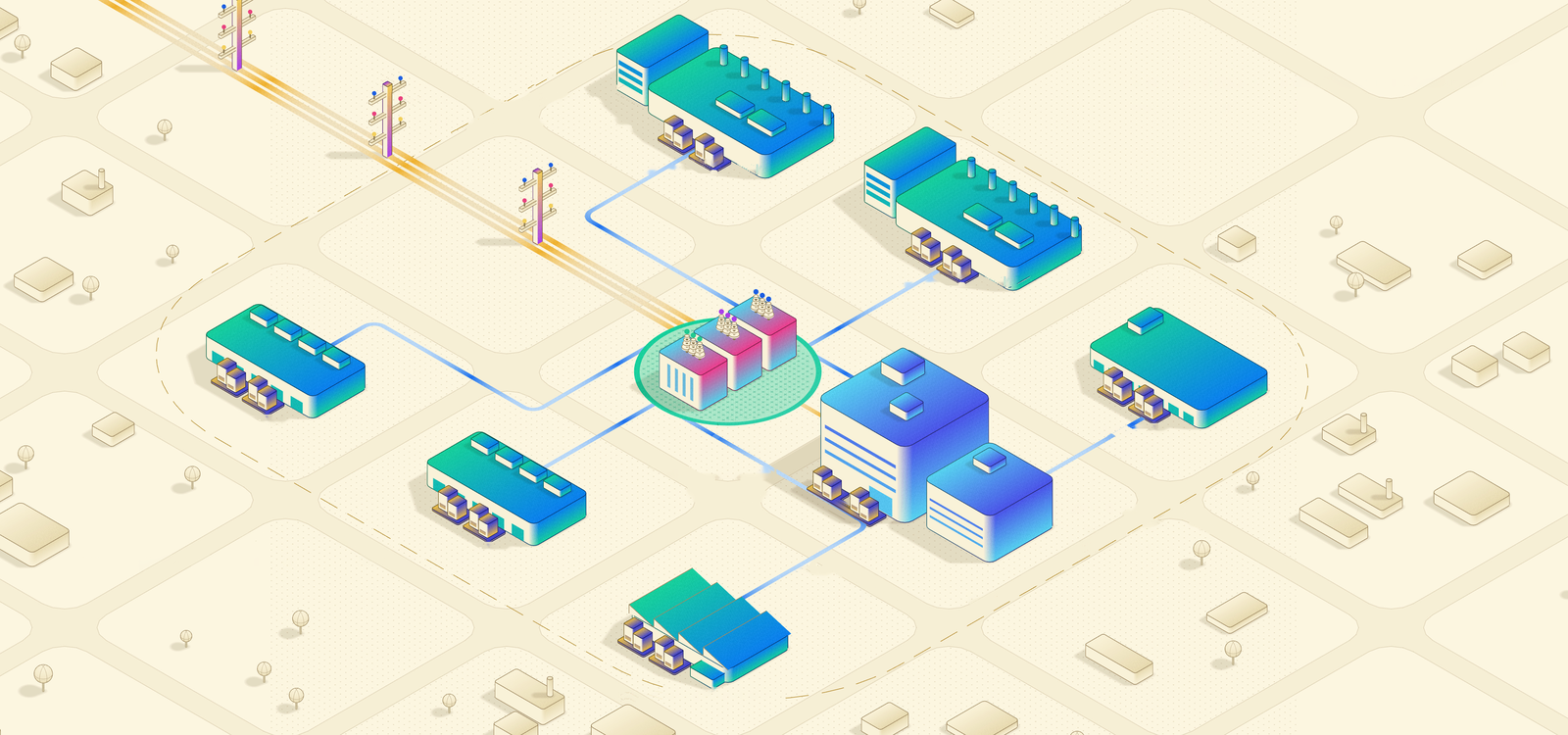
The constraint: getting power to the data centre
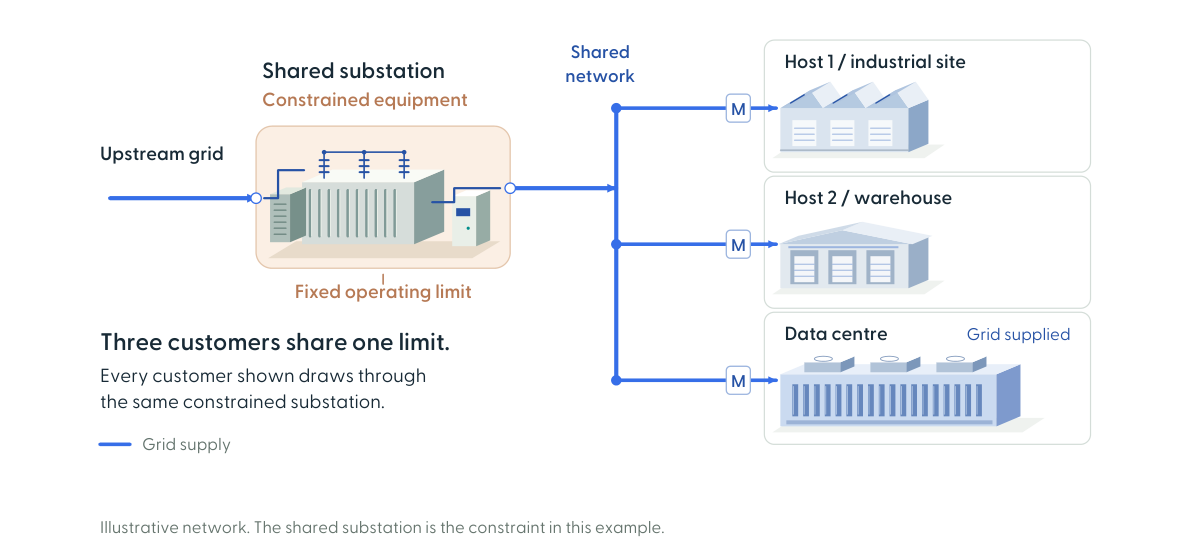
Data-centre customers in Singapore have been awarded capacity but cannot yet energise their full allocation because of upstream network constraints. Tens of megawatts across more than one operator are waiting for network upgrades. The question is whether the network can carry more power to the data centre, at the times it needs it, while staying within safe operating limits
The solution: make room on the shared network
Batteries at other businesses can make room for the data centre. We propose installing battery energy storage systems (BESS) at commercial and industrial (C&I) sites that draw power through the same constrained equipment as the data centre. During busy hours, the batteries supply part of each host site’s demand, reducing how much power it draws from the grid. A battery helps only where it reduces loading on the constrained equipment.
Each battery connects behind the host’s electricity meter and supplies its internal electrical system. The battery replaces part of the electricity the host would otherwise draw from the grid. The factory keeps producing, the warehouse keeps operating and people keep working in the office. The business uses the same amount of electricity. It just draws less from the grid.
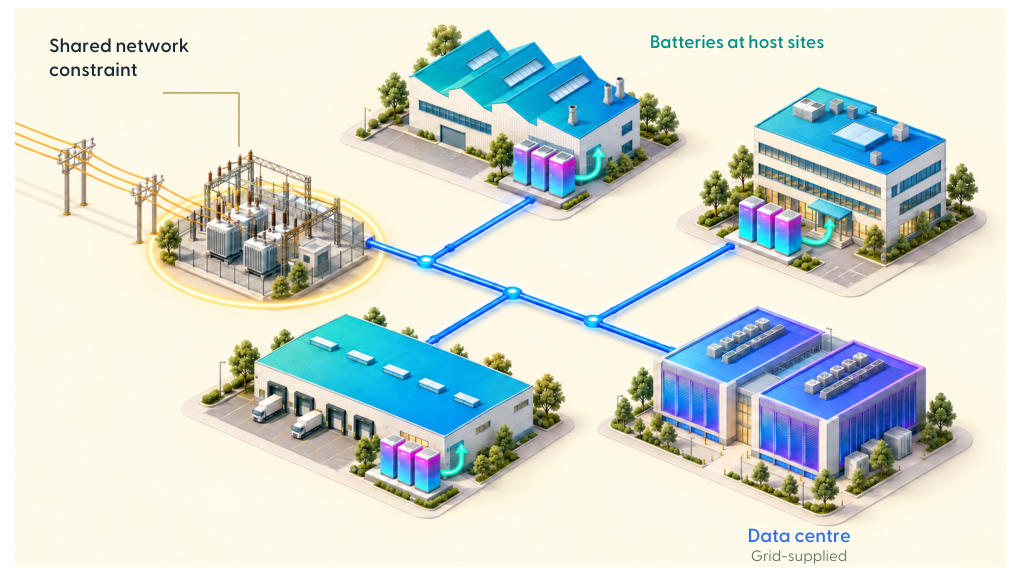
The host doesn’t need to export electricity or run a cable to the data centre. The benefit appears upstream: with hosts drawing less from the grid, the shared equipment carries less power. That makes room for the data centre, which continues to draw its electricity from the grid. One host may provide only part of the required relief. Our VPP software coordinates batteries across sites that relieve the same constraint, so we can manage their output together. Host demand changes. Batteries differ in available power and remaining energy. We adjust each battery within its limits to keep the fleet delivering the required relief. During the peak, the batteries supply part of their hosts’ demand. The hosts draw less from the grid, reducing loading on the shared equipment. The data centre can draw its permitted demand throughout the peak while the fleet delivers the required relief. The batteries recharge when the network has room, within approved limits. This is the basis of Distributed Capacity: batteries reduce grid demand at the right sites, making room for the data centre on the shared network.
Want to know how Distributed Capacity works? View the Full White Paper Here.